Wednesday, May 14, 2014

Nothing Doing/Doing Nothing


Not this kind of nun
Around the block from my childhood house in Seattle’s North Capitol Hill neighborhood was a Catholic retreat called Still Point. To imagine the nuns who ran the hostel, erase any ideas you have of wimples and habits, of piously folded hands and tightly closed mouths. These women, mostly in later middle age, wore Birkenstocks, handwoven smocks and practical trousers. They played guitar, grew sprouts in a jar in the kitchen window, fermented their own goats-milk yogurt, and babysat the neighborhood children. My grandfather, Italian, Catholic, and deeply distrustful of the vernacular mass, did not like them.


These nuns were hardly cloistered; they belonged to an activist order of teachers, nurses, and social justice advocates. And they were anything but still; my favorite among them was Sister Rosario, a weatherbeaten woman in her sixties who was always doing something with her hands (though much later I learned that in fact she also practiced Zen meditation). All that activity, however, provided a space for rest and contemplation for others, for the weary clergymen and laypeople who came to Still Point to escape whatever it was that had worn them down spiritually, physically, emotionally, whatever.
Not this kind of yogurt

They were interesting people, too. I remember sitting at the kitchen counter in the big, sunny, health-food smelling kitchen listening to a priest who had just returned from a mission in Bulgaria (can this be right? we’re talking about 1975 or ’76, so the middle of the cold war), talk about how people there made their yogurt in a sheepskin, and then just carried the sheepskin full of yogurt around house to house to sell it. To my seven year old mind, that was pretty much the craziest, coolest (meaning, grossest) thing I had ever heard. Yogurt in a skin! I mean yogurt -- spoiled milk you ate on purpose -- that was already kind of a new and weird and uncomfortable concept. But in a skin!

The dynamic balance between the nuns’ activity and the stillness it created, that is what I am on about here. Perhaps my thoughts stray in this direction because of my enforced non-dancing while I take care of my hip. Or maybe I am still surfing the excellent wave of energy generated by the panel on No/Thing: Medieval Art and Apophasis that I had the privilege to organize at the International Congress of Medieval Studies at WMU in Kalamazoo last week. Or both. Probably both.

Not this kind of not dancing.
Not dancing pains me, but it also releases me from pain, so I am trying to embrace it for what it is, or as one of the panelists put it in the title of her paper, “the thing it is not and the thing it could be.” Indeed, all dancing is about not dancing, too. Without stillness, without a still point, all movement lacks order. Like music, dance is made up of the thing it is, movement, sound, and the thing it is not, stillness, silence. Or, to borrow a more eloquent expression of the idea from the redoubtable Ursula Le Guin:
Only in silence the word,
Only in dark the light,
Only in dying life:
Bright the hawk's flight
On the empty sky
(“The Creation of Éa” from the Earthsea trilogy)

Which is another way of saying

Form Does not Differ From the Void,
And the Void Does Not Differ From Form.
Form is Void and Void is Form;
The Same is True For Feelings,
Perceptions, Volitions and Consciousness
(The Heart Sutra)
Not this kind of paradox (this is paralipsis)

The caesura, the held breath, the blank space between words, the sudden cessation of movement, all these things draw attention to the most inexpressible thing of all, which is to say, nothingness. Not meaningless nothing, but the nothing of enlightenment, of the Buddhist satori. Apophasis (pronounced like hypothesis, as one of the panelists went to the trouble to find out), is the (usually spiritual) quest to know the unknowable through the things that it is not. Thus, when Christians interpret the 22nd Psalm as Jesus’ agonized lament upon the cross, the line, “I am a worm, and no man,” is not to say that God made flesh is literally to be understood as the lowliest and lowest form of terrestrial life, but instead that perhaps by thinking on the worm the mind can begin to climb up toward its opposite, the inexpressibly divine.

So, could one imagine an apophatic dance? A dance of negation? Certainly the Danse Macabre of the Middle Ages was a way of thinking about the stillness of the grave through frenzied movement, and the spinning dance of the Sufi dervish uses a kind of centripetal force to fling the soul out into the Beyond. I am not certain, however, that these dances are so much apophatic as ecstatic, which is a different key of spirituality. Does classical ballet admit of such ambitions?
I think it would take a severely disciplined choreographer to get at this; shed the representational urge, the romantic architecture, the virtuoso impulses and get right to the bones of what ballet is (a rigorously formal corporeal vocabulary) and what it calls attention to by way of negation (the incipient disorder and dissolution of frail bodies). It would be something austere, maybe even harsh, but it would not be an empty stage. You need the possibility of motion to make non-motion work as an idea, just as the reverse is true. And it might also not be minimalist. Quite possibly it would look a great deal like certain late Balanchine ballets in which the non-representational logic of the dance is taken to its limit, and here I am thinking of say, Kammermusik No. 2 with its angular, antsy energy. 
Not quite an apophatic ballet, but close.


Sister Rosario had a room in the attic of Still Point, as I recall. The dormer windows looked out over the bramble of blackberries that grew along the downslope to the east, across Lake Washington, towards the blue silhouettes of the Cascades. The floor had an old, napless Persian rug, a guitar leaned against the wall, and the air smelled a little odd to my very bourgeois little nostrils, a mixture of old fir floorboards, superannuated wallpaper, sweat and incense, I think. Nevertheless, I liked that stuffy little room. I thought it was her bedroom, but when I asked her about it, she said no, it was just a place to come and be quiet. And then she was quiet and her hands, always busy, were still. Being small, I was not very good at sitting still, and maybe my memory is faulty here, but I remember that something about how she sat there, her wrinkled face wearing a slight, calm smile, made it seem possible just to sit and gaze out that window at the faraway. Sometimes doing nothing is something in itself, or to paraphrase one of the panelists, sometimes nothing is pregnant with what might be.
Not the view from Still Point, but still...

Friday, April 25, 2014

Rite(s) of Spring

Last weekend a friend and I took our children to see Ballet West's reboot of Rite of Spring. It was a little different from any other production I have seen and it might have been a lot less full of hokum than the more literalistic, narrative treatments had the costumers not decided to put all of the dancers into vaguely Star-Trekish spandex. The post-industrial set felt a little "cutting edge opera production of the early 90s" to me as well, but the dancing was stellar, including the young boy who played what might have been "the Chosen One," but might also have been a young deity, an acolyte, or any number of other ritual actors.

At the very end, much to the delight of my offspring, the large copper disk hanging at the back of the stage that I thought was meant to be some kind of prehistoric sun deity turned into a basin, and rain from on high filled it up. Then, as the score crashed to the close of the Sacrificial Dance, the boy and his female shadow or double were both deluged by this water as the basin tipped back to the vertical. Cool effect. Wet stage, wet spandex.

Though the staging was a little too Cirque-de-Soleil-esque and not quite reflective enough for my taste, I did like the choreography, for the most part (Nicolo Fonte), and the company just keeps getting better, especially the male dancers, the newer generation of whom are far more technically adept than their forerunners. I think that if Adam Sklute can just trust his company's skills to carry them a little bit more and resist the urge to play to the middlebrow, BW could change the whole culture of dance performance in the region and maybe open up the possibility of more experimental dance finding an audience.

The non-narrative, non-literal treatment of the Rite was refreshing, and it helped focus attention on the music, which is still sharp and astringent after more than a century. The rites of spring -- graduation, end-of-year ballet recital, final parent-teacher conferences, and of course, the impending pilgrimage to Kalamazoo for the International Congress on Medieval Studies -- are on my mind, of course, and the music, with its counterpoint of tenderness, abandon, and foreboding, seemed particularly in tune with my mood.

When I began writing this entry I thought I would have something more profound to say about the ballet, or about spring, or about these annual rituals. But perhaps because it is also the week in which the end-of-semester rituals are a bit attenuated for me (I am not giving any exams, and I have already finished grading), I am inclined only to observe, and not to pontificate. It's just as well.


Monday, April 14, 2014

Passed Over


A more somber than usual blog tonight, in memory of the three human beings who lost their lives in the shootings in Kansas City on the eve of Pesach. It would be disrespectful to their memory to call it mere irony that none of them were Jews, when the gunman was a vitriolic anti-Semite whose choice of venues was clearly motivated by his hatred of Jews, but it does remind me of the famous lament of the German Protestant minister Martin Niemöller, “First they came for…” Every time one of these crimes occurs, in which the cocktail of readily-available arms, tolerance of sociopathy cloaked as political opinion, and a twist perverted vigilantism, explodes into yet another utterly shocking and yet predictable bloodbath, I think of how he concludes his condemnation of his own and other’s indifference to Nazi genocide: “and then, they came for me.” 

What, if anything, this has to do with ballet, I do not rightly know, though on Saturday I am going to see Ballet West perform Jiří Kylián’s Forgotten Land, along with a couple of other things (like, for instance, Rite of Spring). Last fall I saw his earlier Return to a Strange Land, a tribute to his own mentor, suddenly dead, set to Janacek’s haunting cycle of piano pieces composed as a lament for his daughter, and Forgotten Land (according tonotes on the Joffrey Ballet website) “explores memories, events, and people that over time are lost or forgotten.” The echo of the title of the earlier work cannot be a coincidence. Also, it is set to Benjamin Britten’s Sinfonia da Requiem, which, while not as heartbreaking as the Janacek, is nevertheless not a cheery piece of music, taking as the implicit text of its three movements the Lacrymosa, the Dies Irae, and the Requiem aeternam of Office of the Dead.

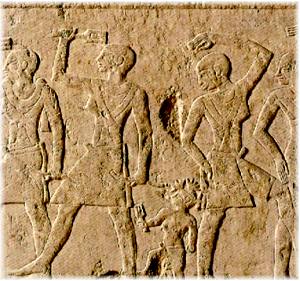
Dance and mourning are old partners; you can see them going down the road together at any New Orleans-style funeral, or along the walls of some old churches in Scandinavia, or following along behind the mummy in Egyptian tomb paintings. The dancers may be sending the departed off in style, celebrating the life lived, or using their living bodies in motion as a talisman against the stillness of the grave. 

There is no talisman, no Tau painted in the blood of a lamb, that can spare any of us from the fate of all living beings – that is, to die – but one can certainly imagine things we might do to lessen the risk that a fourteen-year-old boy aspiring to compete in a teen talent contest and his grandfather, a physician and a family man, would be shot by a former KKK official armed with legally-obtained guns and an excess of perverted self-righteousness (the guy was still shouting “Heil Hitler” when they arrested him). One can certainly imagine laws and safeguards that would have helped prevent the senseless death of Terri LeManno, who was visiting her elderly mother at a Jewish-run retirement home (LeManno was Catholic). It may be true in a limited and highly disingenuous way when NRA boosters say, that “guns don’t kill people, people kill people,” but last week when a deranged teenager went on a rampage at Franklin Regional High School with a pair of knives, nobody died. A physician who treated some of the patients observed that if the boy had been shooting instead of stabbing, the situation would have been far worse. So people with guns do kill people much more effectively than people with sharp objects. It is one of the things guns are for and one of the reasons people no longer go to war armed "only" with spears. 

So what to do, not to fall victim to quietism or despair? This week, looking for some more socially and politically relevant way to celebrate Passover with my kids, I came across an opinion piece by Rabbi Arthur Waskow, a Jewish activist and Occupy Wall Streeter from New York City, that ran in the Huffington Post in 2012. He proposes ways that people of different faith traditions can enrich their celebration of the season’s holy days (Pesach and Palm Sunday), by linking the ancient rituals to present day issues. It is pretty standard stuff in terms of connecting the sufferings of the poor and oppressed today to the fundamental messages of social justice that both Judaism and Christianity can be understood to contain, but I really like way he concludes. He says that the world is undergoing an “earthquake” at all levels, from the disruption of basic biological systems to the technological redefinition of the self and sociability, and that we have three choices; ignore the quake and get crushed in the rubble, cling to the past as something immovable and become hopelessly reactionary, or learn to dance in the earthquake. He urges us to “attempt to dance in the midst of our earthquake.”

It is a metaphor, I know. But it is a metaphor with a groove, and maybe we can dance our way out of this sad mess to it.


Wednesday, April 9, 2014

The Hip Speaks


See page 550
I am forty-five years old, so it never comes as a complete surprise to me when my body just will not go along with the plans I have laid for it. I had early training in not being surprised, anyhow: at fifteen the state of my knees meant that I had to stop ballet for long enough that I lost my desire to pursue it as a career. At twenty, I damaged a disk in my back putting a rowing shell in the water and learned that even a young, fit, body has to be treated kindly in order to keep it in working order. At thirty-two, my doula-scripted birth plan for my first child had to be thrown out when I developed HELPP Syndrome, one of those really nasty diseases of pregnancy that you read about in the back of What to Expect When You’re Expecting and think “thank goodness that’s not me!” I would not say that my experiences in this regard are significantly out of the norm, either. Our bodies may be ourselves, but they are also oddly opaque to the conscious mind. 

Eloquent profanity (preferable to tears)
Our bodies speak to that mind, of course, primarily in the form of sensation. Pleasure, pain, hunger, satiety, exhaustion, exhilaration, the fight or flight response… The last may be impossible to ignore, but it is remarkable how often one can be a bit out of touch with the others. Pain, in particular, is an odd thing. Some kinds are just so insistent that they cannot be ignored, but from early childhood one gets the message that a certain amount of denial of pain is called for in the practice of life. That is to say, the repression of the pain response is a mark of maturity, so when I stub my toe badly, instead of crying and howling like a baby quite sensibly would, I instead utter some unprintable string of filth, and then hobble on my way to the next thing I must do (the laundry, generally speaking).

Ignoring a certain degree of inconsequential pain, or at least suppressing one’s response to it is probably not a terrible habit in itself. It gets you through life without being too much of a whiner. Plus, it allows you to put things in perspective. Stubbed toe? Painful, but hardly as painful as that liposuction procedure you watched on TLC last week. However, I do think it shapes a pattern of ignoring the body’s voice that may not be so helpful.

See Chapter 5
Case in point. Last fall, I began to notice, maybe not for the first time, but in a really consistent way, that my right hip has a tendency to sort of hang up, or get kind of jammed, so that it feels as if a bit of connective tissue right down the front of my groin has frozen in place. This could occur after I got up from working at my desk, or while I was washing dishes, or more often than not, in ballet class, usually right in the beginning of class on the initial grand plié in first position. Once it happened, then it would not go away for some time, even if I continued trying to articulate my hip and warm up the joint. This was annoying and uncomfortable, but not what I would call painful, so I figured it was just one of those things that happens when one is forty five and not twenty. One gets what the great Zen master, I mean children’s book author and illustrator Arnold Lobel, called “the creaks.”

Pretty soon I started noticing, but not really wanting to acknowledge that my hips kind of ached, especially on the right side. I thought this was just because I was really working out the muscles and the soreness was of the “good” sort that results from exercise. As a lifelong athlete, I am pretty used to that feeling, and it did not strike me as an omen. It was.
As I discovered yesterday, when I finally dragged my aching, really more than aching now, but actively hurting hip to the orthopedist, I have what is called, in the biz, “femoacetabular impingement” which has resulted in the ominous-sounding phenomenon of a “labral tear.” 
This is how it is all supposed to hang together.

A tear, as it happens, can be mended, either by rest and time and strengthening of the supporting tissue, or by surgical means. The other thing, which for the sake of brevity is called FAI, is structural. I could see it so clearly in the x-rays he took and it looked so wrong. Remember elementary-school anatomy, in which one learns that the head of the femur is the ball in a ball-and-socket joint? Well, what if that ball is not round, but instead has a sharp ridge that runs around its outer edge? Imagine the sharp ridge nudging up against the nice, squishy cartilage gasket (labrum) that seals the joint, keeping the precious synovial fluid inside so that bone never rubs directly against bone (instant recipe for arthritis). Imagine that happening over and over again, say, during grands battements, or grands anythings, for that matter. Got the picture? 

So, with my frayed labrum and my deformed femoral head, what is to be done? For now, physical therapy, anti-inflammatories, and only baby ballet. Having made the mistake of googling the terms “labral cam tear” and “FAI,” I am quite concerned that most of the people who comment on their own experiences with these things seem to have ended up having surgery to debride the frayed cartilage and to reshape the femoral head. All I can say to that is yuck.

You gotta love this one. Or, rather, I gotta love it. Twenty times a day.
I would give up every pretty leotard I have ever bought not to have this problem, but since that was not one of the medical options presented to me, I will dutifully do my exercises and hope for the best. Notably, all the exercises and stretches I have been assigned are my least favorites, probably because they stretch the quads and hip-flexors (that thing that seems to hang up is evidently the hip flexor) and strengthen the hamstrings, the imbalance of which, the good Dr. C tells me, lies at the root of the problem. I distinctly recall the orthopedist I saw thirty years ago for my ballet-battered knees telling me essentially the same thing, that like most ballet dancers I had powerful quads, tight iliotibial bands, and relatively puny hamstrings. 

And if you don't listen to your body, at least listen to Shaq!
So, gentle reader, listen to your body, especially to its rich and varied vocabulary of discomfort and pain. Anything persistent is serious, even if it seems little more than a whisper. Take care of it now, not later, when it is worse. And while you are at it, stretch your quads and strengthen your hamstrings. Then you may not have to waste four or five hours a week when you might have been dancing hanging around the PT office having your butt massaged with some stinky icy-hot gel that make you smell like a cough drop or Shaquille O'Neal for the rest of the day. There it is, my wisdom for the ages.

Sunday, February 16, 2014

Ballet is hard, change is harder


In a recent interview (http://www.theguardian.com/stage/2014/feb/12/ballet-grand-dames-gillian-lynne-bery-grey-push-dancers-limit) , Beryl Grey and Gillian Lynne, former Royal Ballet stars now in their eighties, criticized the culture of contemporary ballet for coddling dancers, for making them soft through such pampering treatment as nutritional counseling, physical therapy, and rest days. Never mind that more dancers are maintaining longer careers and retiring with mental and physical health intact these days than ever in the past; these lionesses protest that they worked longer days and longer seasons on starvation wages and were glad to do it. “Ballet is hard,” they say. 

Beryl Grey
I have immense respect for these women, who were indeed tough-as-nails swans in their day; it takes a certain degree of fortitude to compete with Margot Fonteyn. However, their griping is just more of that “in my day, we had to walk uphill in the snow BOTH ways,” self-aggrandizement that Saturday Night Live made such good fun of years ago. In fact, dance has changed in ways that would make the hours they worked crippling and I find it hard to regret that artists are now accorded the some of the same prerogatives as other working athletes. I cannot imagine a retired NBA player decrying the fact that players today have access to ultrasound therapy for strained muscles. And as for the talk of dieting and the valorization of anorexia, I am sorry, but how does being physically weak and mentally ill make you a better, more expressive artist?

The athleticism of modern ballet also comes under fire from Grey and Lynne on the grounds that dancers, though technically more skilled and versatile today, are less “soulful.” Codswallop! This is another one of those commonplaces rooted in cheap nostalgia and, I suspect, an insidiously anti-feminist, class- and race- based set of expectations about the ballerina. She should be delicate, pale, trembling, a veritable wraith (a Sylphide!). Visibly muscular women, women of color, tall women, none of these have a place in the Victorian imaginarium in which traditional classical ballet was for so long invested. But more and more, the color of the ballerina, and along with that, the range of acceptable body types, is becoming more open to difference.

This week, I am in Chicago, and I was able to sneak away from the conference I am attending to see a performance by the Joffrey Ballet at the historic Auditorium Theater, just a few blocks from the hotel. All three works performed on the triple bill http://joffrey.org/contemporary were of relatively recent genesis: Crossing Ashland, by Brock Clawson, Continuum, by Christopher Wheeldon, and Episode 31, by Alexander Ekman. Each of them had a distinctly different relationship to classical ballet, with Clawson closest in his investigation of using the body as an emotional glyph to European choreographers, like Jiri Kylian,  Wheeldon typically hewing close to Balanchine’s starker neo-classical idiom, and Ekman more kindred in spirit to Bob Fosse (if Bob Fosse took speed and went clubbing in the 1990s).  What all three works shared is that incredibly technical and percussive athleticism that I have commented on before in writing about contemporary ballet. 

Ballet dancers today, unlike in Grey and Lynne’s time, are routinely asked to use their bodies in a huge variety of very risky and unfamiliar ways, hurtling through space, colliding with the floor, dragging and dragged, stomping, falling… For example, in Ekman’s piece, the central pas-de-deux involves two men in stocking feet, moving to a spoken-word recording of children’s poetry that sounded like it was from the 1950s, and their interactions compound martial-arts-like combat, contact-improv like rolls, and lifts drawn from the classical repertoire, except made more challenging by the fact that one is lifting a 150 pound man, not a 100 pound woman. Yet this strange passage was, for me, the most compelling part of this odd, wacky ballet; it got at the desire and the anxiety at the heart of ritual combat (wrestling, boxing, dance-offs) between men while at the same time infusing this potentially murky stew with a dash of peppery self-mockery. In other words, it was emotionally, as well as physically challenging for the dancers.

Karel Cruz and Maria Chapman, PNB, in
Wheeldon's After the Rain.
I am surprised that Grey and Lynne and the legions of other more conservative dance observers who repeat the same old saw about today’s athleticism in dance coming at the cost of emotional expression can overlook the entire oeuvres of such choreographers as Pina Bausch (on the one hand) and Christopher Wheeldon (on the other). Wheeldon’s work, in particular, has always struck me as sailing dangerously close to the wind in terms of soppy romance. I will not lie. I adore watching After the Rain, especially the more sensual second act, but that enjoyment is always tinged with my awareness that this might just be the corniest and most sugar-coated ballet romance since, well, since Giselle. Plus there is the whole weird racial thing; it is usually cast with a white woman and a dark-skinned man (it was originally set on Wendy Wheeldon and Jock Soto) -- I would like to see this discussed and maybe challenged a bit more. What about casting say, Misty Copeland in the woman's role, or just ANY different pairing than white woman/"black" man? Alistair Macauley has criticized Wheeldon for his heterosexism in his preference for the pas-de-deux, but even he doesn't plumb the really troubling race politics at issue in the bizarrely conformist casting of After the Rain.

Barnett Newman, The Beginning, image from
The Art Institute of Chicago website
It is possible, indeed even probable, within the modernist idiom of any art form, to tend toward a kind of dewy-eyed romanticism, and Wheeldon is for me the dance-equivalent of Mark Rothko; deeply saturated fields of emotional color thinned out and merging into dark tones around the edges, the classical core breaking up into cloud-wisps, the light fading. Continuum, set to Ligety’s unrelentingly modernist piano music, has the same structural rigor as a painting by Rothko, or actually, more like something by Barnett Newman, that echt-technician of Abstract Expressionism, whose 1946 The Beginning I had seen earlier on the same day that I saw the Joffrey. It is, like Continuum, both spare and lush. Oh yes, and it shares the same color palette.

If you take So You Think You Can Dance as a gauge of “what dance has become” it is indeed the case that athleticism and technical prowess have trumped the deeper, affective and intellectual pleasures of the art form. However, that is a product of the particular strictures of the television dance-competition form; those young dancers (many of them no doubt deeply engaged with dance and capable of far more reflective and mindful expression under other circumstances) have to learn new choreography very quickly, and they are not given time to develop much of a relationship to either the movement or the music, both of which are in any case often vapid. Any "emoting" they do is very superficial and often tied to the uber-cheesy "lyrical" pieces set to pop ballads.

However, in real contemporary dance, athleticism is just one brush in an ever expanding (and ever more physically and intellectually demanding) quiver that artists are expected to bring to the studio. When you think about the disconnect between the ballet training that most kids get in this country, with its emphasis on traditional forms and technical mastery, and the feats of imagination and strength that are asked of professionals in a company like the Joffrey, the fact that dancers can identify and make visible the affective qualities of the very difficult choreography they are asked to perform is all the more impressive.

"Bah, humbug!"
Not all of them can do it. There was one dancer in the Wheeldon piece who seemed too happy; she just grinned and beamed like a showgirl the whole time and it drove me nuts since it meant she did not engage with her pas-de-deux partner so much as with the audience. But that lack of emotional sensitivity is in fact so rare among dancers I have seen in recent years that it stood out. 

In the end, as we age, we have choices. We can look at what the world is becoming and marvel at it, try to wrap our minds around the possibilities it offers, try to articulate the challenges it presents, and try to stay relevant. At forty-five, no longer young but facing what I hope is a long future of being not-young, I can only hope I have the courage to take this route. Having spent a week at this conference where the up-and-comers in my field look so bright and fresh and daring, I have had to be quite firm with myself about singing that tired old tune of “Well, back in my day…”

And that is option number two: we can turn up our noses and sniff about the inferiority of the moment in which we now live to the world of our youth. There is nothing so repellent as an old snob.